Why your platform ROAS and your bank account disagree
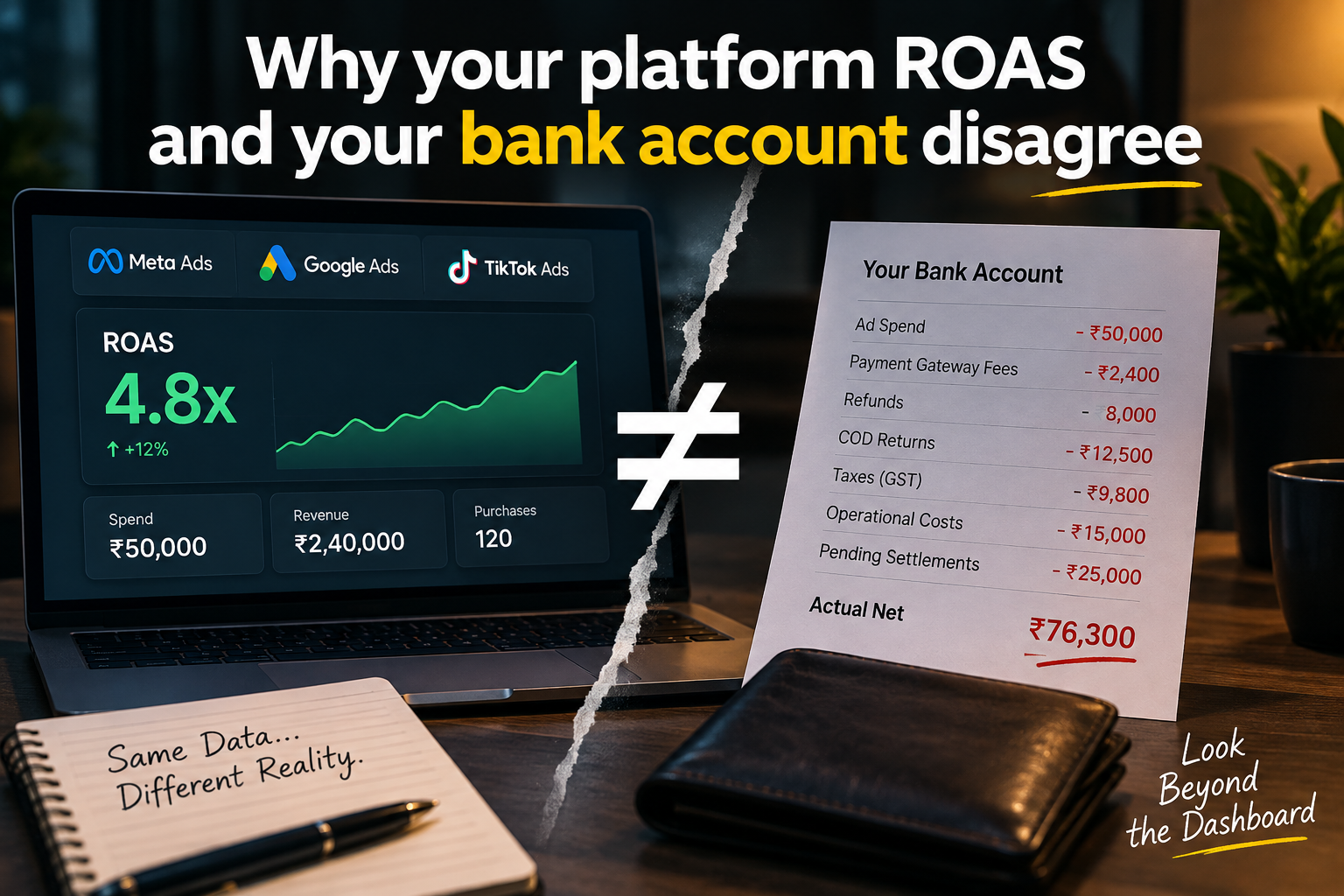
If your platforms report a blended 6x return and finance can only trace half of it, nothing is broken — the two systems are answering different questions. The platform reports attributed conversions within its own window. Finance reports money received. Reconciling them is not a technical chore; it is the difference between scaling confidently and scaling blind. Three structural causes sit behind the gap. 01 — View-through windows. Default settings credit conversions to impressions a user never clicked. On brands with heavy organic demand this inflates reported returns considerably, because the platform claims sales that would have happened regardless. 02 — Cross-platform double counting. Two platforms will each claim the same purchase. Summing dashboards produces a number larger than the business took — sometimes 30–40% larger where retargeting budgets are significant. 03 — Unreconciled refunds and cancellations. Platforms record the transaction, not its reversal. In hospitality, high-ticket retail and any category with deposits, gross booked value and recognised revenue can diverge sharply. "Report against the system that pays salaries, not the one that sells media." — how we frame it with clients. What to do instead: nominate one system of record — CRM or store — and report against it monthly. Keep platform data for optimisation decisions, never as the headline. Tighten attribution windows to what your sales cycle justifies, then hold them constant. Run periodic geo or spend-holdout tests to estimate incrementality. Report cost per confirmed customer, not cost per reported conversion. Reconciled reporting nearly always shows lower returns than the dashboards did. That is the point: a defensible 3.4x you can scale against is worth more than a 6x nobody can find.